
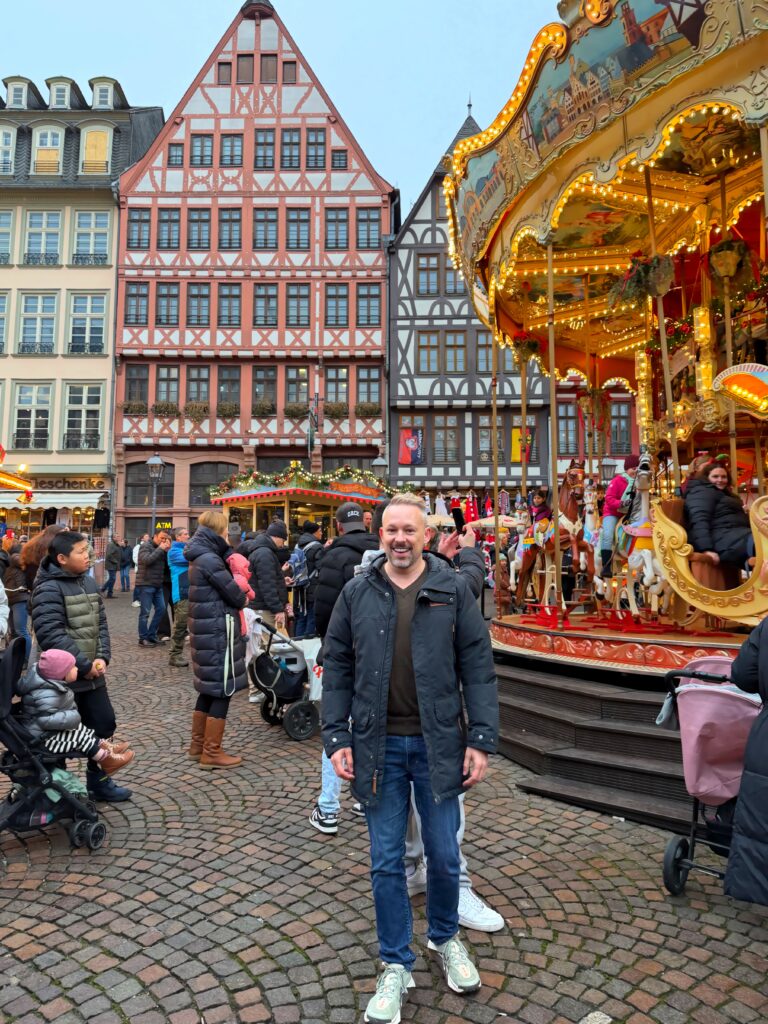
I love wandering through cobblestone streets, warming my hands on a steaming cup of mulled wine, and ducking into centuries-old buildings that smell faintly of wood smoke and history. If you’re an LGBTQ traveller thinking about going to Germany during the Christmas market season, this guide pulls together what I learned visiting three historic highlights: the romantic (and pink) atmosphere of Heidelberg, the medieval charm in Trier, and the twinkling festivities of Wiesbaden.
These places are cozy, full of history, and are genuinely welcoming to queer travellers. Below you’ll find what to see, where to go for queer nightlife and community spaces, and some practical tips for getting around – all based on my own experience.
Historic Christmas for LGBTQ travel
There’s something about smaller, historic cities that makes them perfect for the LGBTQ travel community. The markets tend to be more relaxed than big-city events, the architecture creates a cozy atmosphere, and local communities often host events that fuse culture, charity, and even queer nightlife.
Visiting during the market season means stalls filled with handcrafted goods, warming street food, and lots of chances to chat with locals. And when a market is explicitly queer-friendly (like the pink market I found in Heidelberg) it often doubles as a fundraiser or community hub, which gives you a meaningful way to support local organizations while having a great time.
Heidelberg: a pink market and old castle
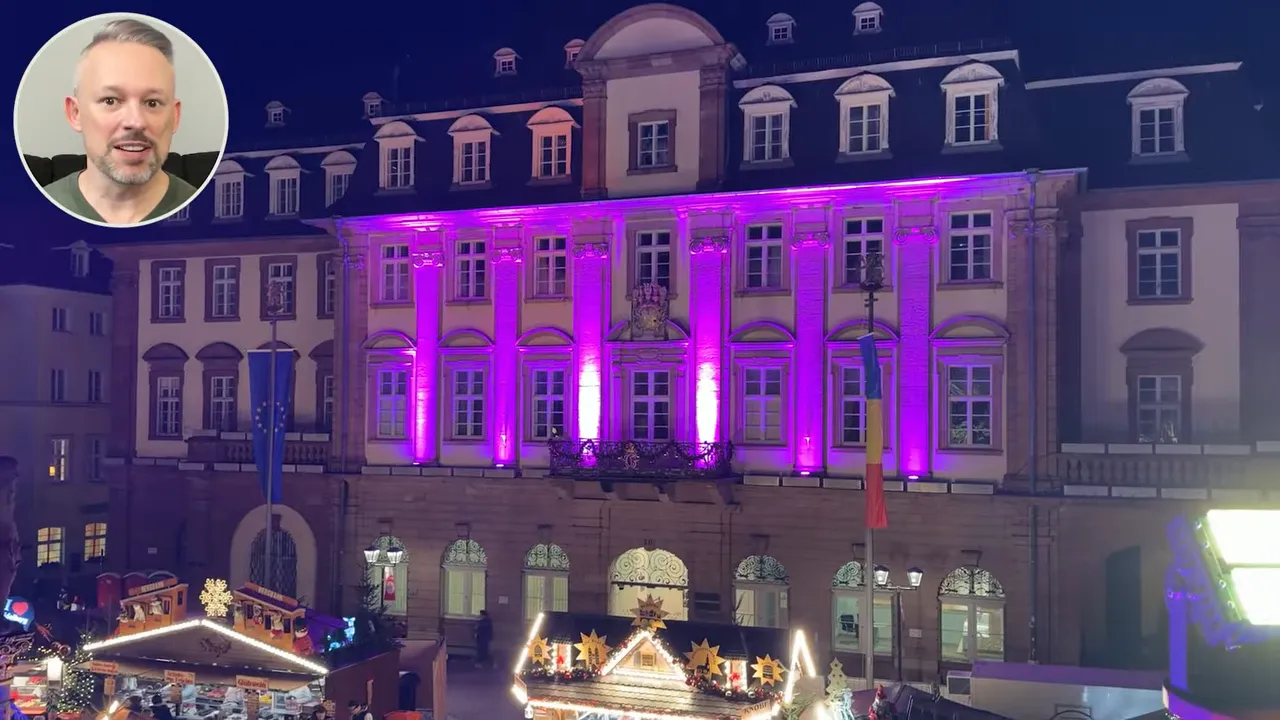
Heidelberg was my starting point. One night each year the town runs a pink Christmas market that raises money for a local AIDS charity. The whole mood is celebratory with intention – vendors pour pink mulled wine into pink mugs, and even the town hall and church are lit in pink. It’s an immediate reminder that queer culture and community are woven into the fabric of some German towns.
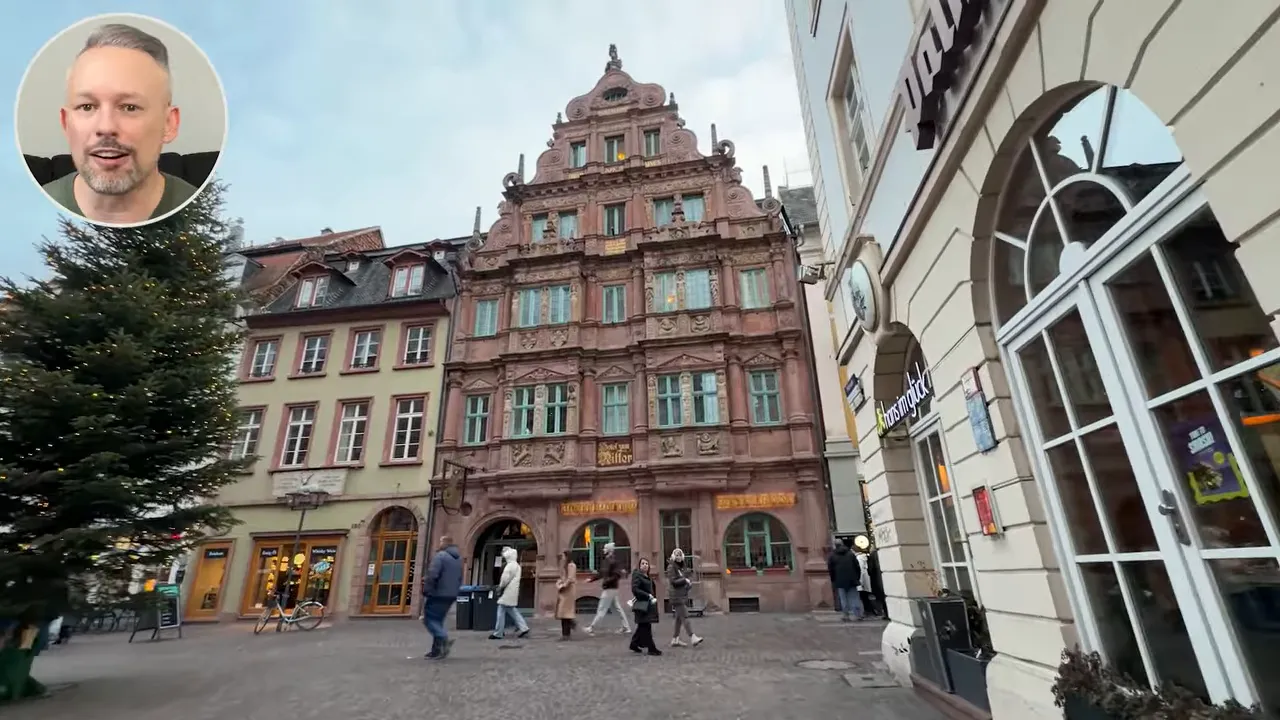
Walk beyond the market and you’ll find the Altstadt – narrows lanes, centuries-old façades, and more little markets that run every day in the weeks leading up to Christmas. It’s not as crazy busy as wandering around a big city Christmas market like in Frankfurt for example, so you never feel lost in a crowd.
Perched above the town is Heidelberg Castle. You can reach it by a funicular and walk around terraces that look out over the Neckar River. Inside the castle complex you’ll find curiosities like the world’s largest wine barrel. It’s a lovely and unique mix of elevated views and intimate history.
Tips for Heidelberg:
- Bring warm layers. The markets are outdoors; a thermal base layer makes mulled wine much tastier.
- Go on Dec 1st. If you can, go during the pink market – it’s a great night with a mixed crowd and a fun DJ.
- Use the funicular to reach the castle. It’s much easier and faster than hiking and is a nice convenience.
Trier: Roman ruins and medieval streets
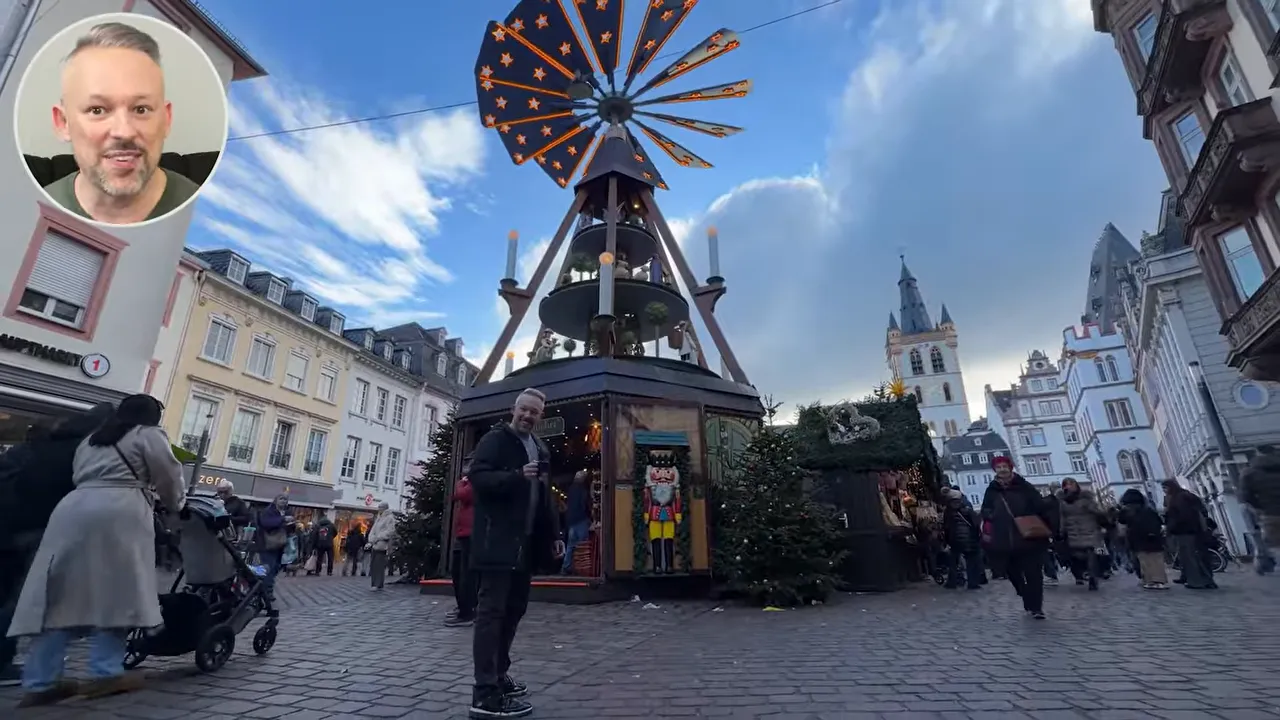
Trier calls itself Germany’s oldest city, and you can feel that history everywhere. The Christmas market sits snugly among medieval buildings, which makes for a less hectic, more atmospheric market experience – perfect if you’re into history and cozy vibes.
Two must-sees in Trier are the Porta Nigra and the Roman amphitheater. The Porta Nigra dates back to Roman times – the foundation stone was laid in 170 AD. Walking around/through/inside it is like stepping into a time machine.
The amphitheater is another highlight. You can explore the area beneath the arena where gladiators and animals were once held. It’s unexpectedly intimate and gives a real sense of scale about how big these Roman structures were.\
On the queer community front, I spent an evening at SCHMIT-Z, a queer cultural center that doubles as a social hub. They often host talks about sexual and mental health, screenings, performances, and community meet-ups.
Tips for Trier:
- Buy a combined ticket if you want to visit multiple Roman sites – it saves time and money.
- Check local listings for events at spots like Schmitz. They might host panel nights or small concerts.
- Take a walking tour – seeing the Porta Nigra and amphitheater with a guide brings the Roman stories to life.
@josh.rimer Content Creator or Tour Guide? Both I guess! 😆 Had to do a little deep dive into the best-preserved Roman city gate north of the Alps, which is a UNESCO World Heritage Site I might add… built around AD 200 using massive stone blocks without mortar. 😲 This is in Trier – just one of 17 cities that are part of the historical highlights of Germany! 🇩🇪 #myhistoricgermany #visittrier #triererleben #visitgermany #germanytourism
Wiesbaden: a twinkling market & museum
Wiesbaden’s Shooting Star Market (or Twinkling Star Market) turns the city center into a festival. Over 100 stalls, local performers, and even a Ferris wheel make this one of the most picturesque markets I visited. Expect stage performances, glittering decorations, and lots of artisan treats.
The city itself has thermal springs that you can touch and taste – you’ll actually see locals swigging the water at fountains. The Museum Wiesbaden is a content-rich stop if you want to take a break from the cold and indulge in art and history.
I loved skating on one of Germany’s largest mobile ice rinks, set against historic facades and a central fountain. They rent skates on-site, so you don’t have to lug yours across the ocean.
Near that is the Kurhaus and Spielbank – the casino housed in a palace-like building. It’s said to have inspired Dostoyevsky’s novel The Gambler because of the high roulette stakes allowed there.
For LGBTQ nightlife, I went to Let’s Go Queer – typically on the first Saturday of every month – where DJs and drag performers keep the energy high. It’s the kind of event that makes winter nights feel electric and inclusive.
Tips for Wiesbaden:
- Plan an evening for skating and market strolling – they pair perfectly and are both fun winter activities.
- Pop into Museum Wiesbaden to see the painting that inspired Taylor Swift’s The Fate of Ophelia.
- Look up what’s happening for events in advance. Things like Let’s Go Queer are monthly, so timing matters.
Practical LGBTQ travel tips in Germany
A few logistics that made my trip smoother and are useful for anyone in our community thinking to travel here:
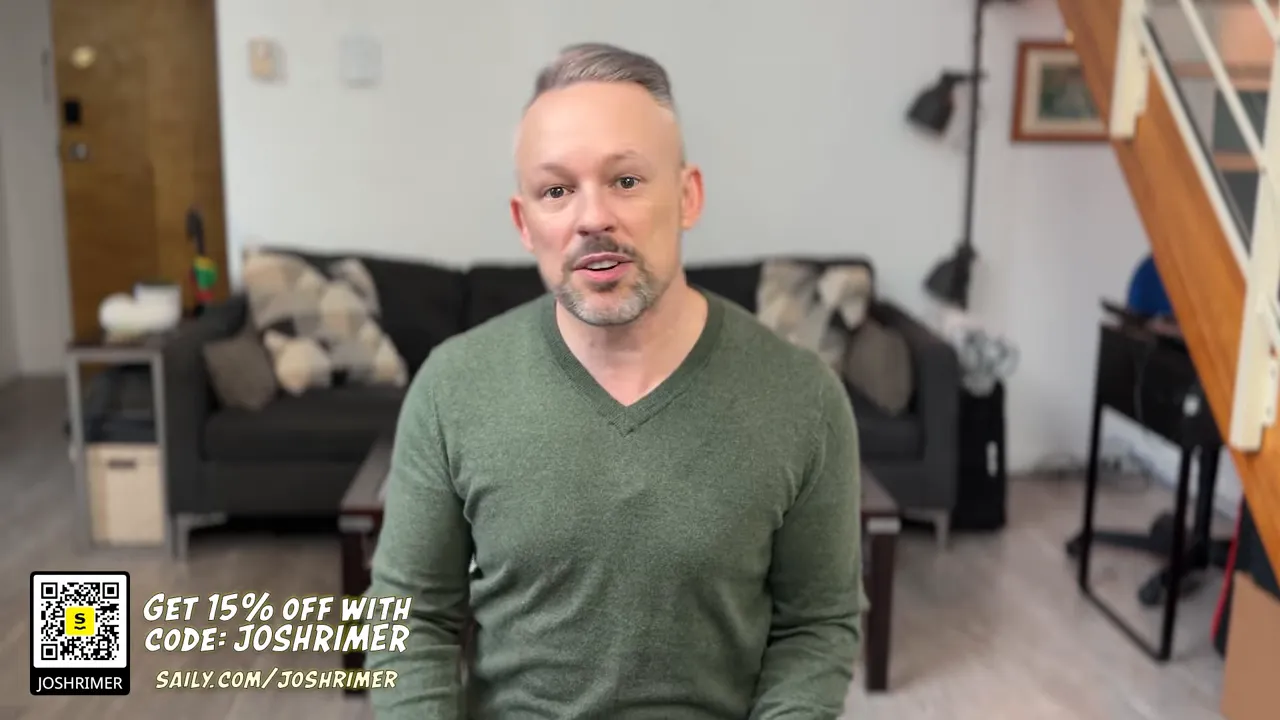
- Connectivity. I used an eSIM so I never ran out of data or had to hunt for a physical SIM at the airport. Download the app, pick a plan, and you’re connected instantly. Get 15% off any plan from Saily by using discount code JOSHRIMER.
- Train travel. Germany’s rail network links these historic cities efficiently. Trains are frequent, comfortable, and more relaxing than driving in winter.
- Packing. Think layers, good/waterproof shoes or boots, and a compact umbrella. A warm hat and gloves are a good idea.
- Glühwein. If you want a mulled wine in a souvenir mug, vendors will charge a small deposit for the mug which you can return – or keep, like I did.
- Safety and inclusion. Germany is generally safe for queer travellers, but local attitudes can vary by region. There are 17 that have been vetted by the Historic Highlights of Germany as inclusive and welcoming destinations for all visitors.
Final thoughts and long-term planning
Germany has 17 historic highlights that are easy to reach by train or car on the autoban from major hubs like Frankfurt, Berlin, Hamburg, and Munich. The three cities I explored are just the tip of the iceberg, and each offers a different flavour of market, history, and queer life.
If you prioritize warm community spaces, seasonal events, and history when selecting destinations for your LGBTQ travel needs, you’ll find Germany’s smaller historic cities especially rewarding. They combine the intimacy of local culture with the kinds of queer-friendly events and spaces that make travel feel both safe and exciting.
Quick checklist before you go
- Get an eSIM before you leave so it’s ready to go when you land.
- Pack layers and good/waterproof footwear so you can spend a lot of time walking outside.
- Look up queer community centres and/or events ahead of time to see what’s happening.
- Plan your train segments in advance for the most efficient routes and scheduling.
- Leave the diet for when you get home and indulge in the tasty market offerings.
Historic Germany in winter is a mix of storybook streets, warm gatherings, and interesting history. Whether you’re hunting for a pink market, Roman ruins, or an ice rink framed by a historic fountain, these cities deliver. I plan to go back in the summer to see more of the 17 historic highlights at that time of year since each one has its own personality and potential for meaningful LGBTQ travel experiences.
This article was sponsored by Saily and my trip was done in collaboration with the Historic Highlights of Germany
Check out my YouTube channel! |
See more of my LGBTQ travel videos: |
| Subscribe |